
Stone Cladding for Coastal Homes: Choosing and Caring for Your Stone
Living on the Sunshine Coast means salt air, humidity, summer storms and strong sun. Natural stone cladding handles these conditions well, but the right stone and a little care make all the difference. Here is our guide to choosing and looking after stone cladding on a coastal home.
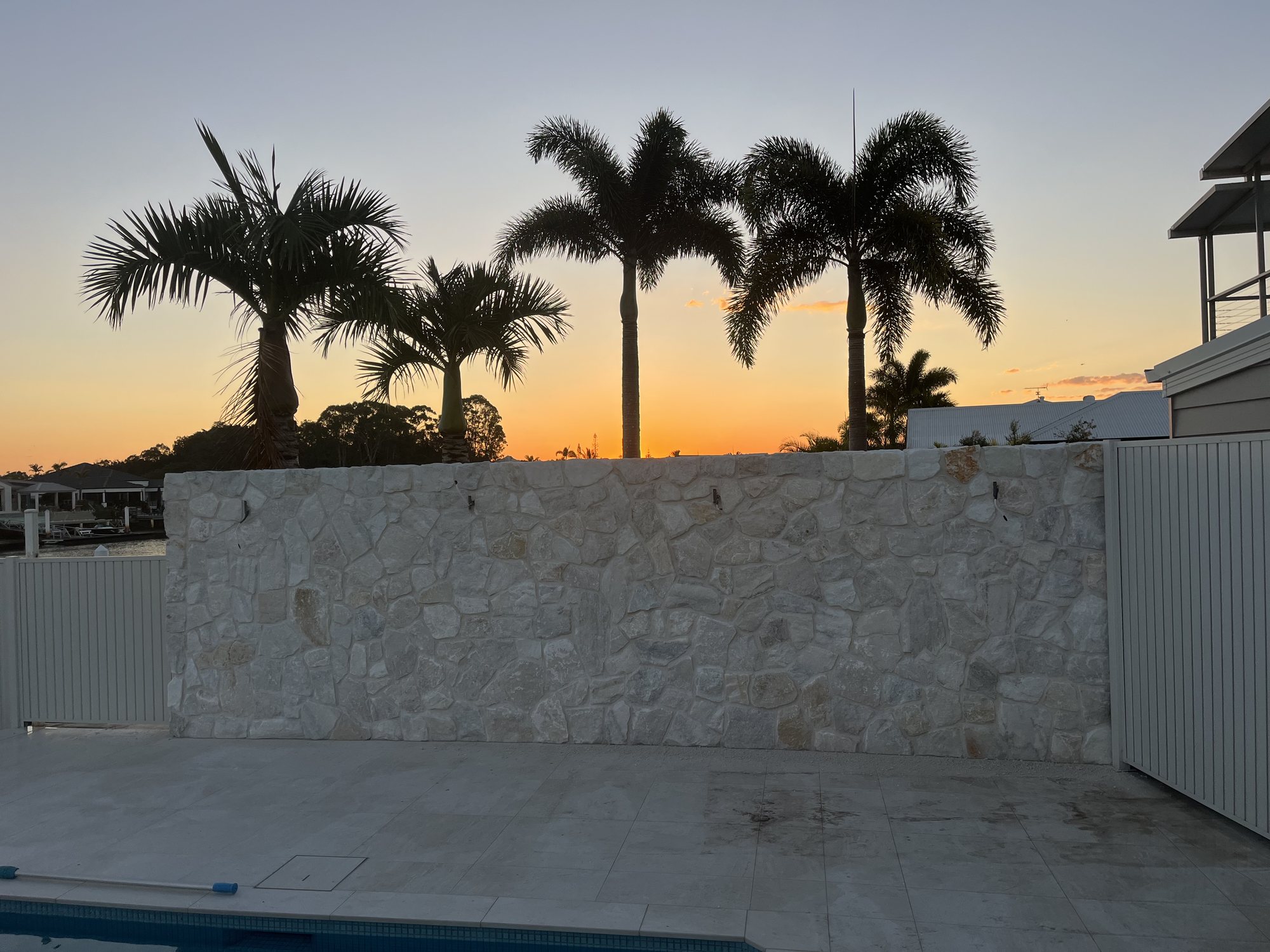
Choosing stone for coastal conditions
Dense stones such as quartzite, granite and good-quality sandstone are well suited to the coast. They absorb less water and resist salt better. Lighter colours stay cooler in the sun and suit bright, relaxed coastal homes, while darker stones create contrast against white render and light cladding.
Installation matters most
Most problems with stone cladding come from installation rather than the stone. A sound substrate, waterproofing where needed, the correct adhesive for outdoor and wet areas, and good drainage behind and below the stone all help it last. That is especially important for pool stone cladding walls and retaining walls, where water is always present.
Sealing your stone
A penetrating sealer helps natural stone resist salt, chlorine, mould and staining without changing its look. Pool walls, outdoor kitchens and areas near the beach benefit most. Depending on the product and exposure, resealing every few years keeps the protection working.
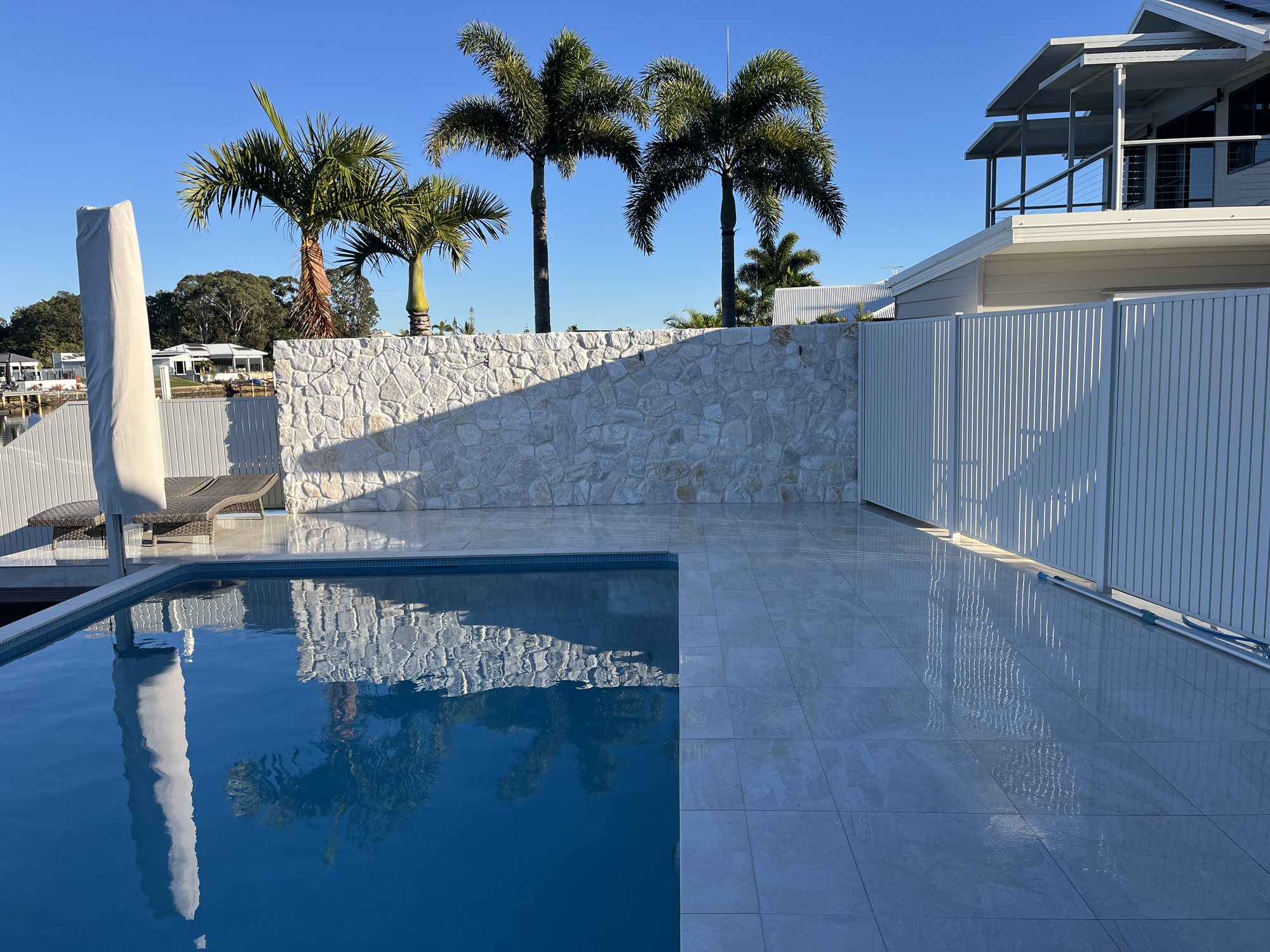
Simple cleaning tips
- Rinse with fresh water every few months to wash off salt spray, especially on beachside homes.
- Use a soft brush and a pH-neutral stone cleaner for dirt or marks.
- Avoid acid cleaners and high-pressure blasting close to the surface, which can damage stone and joints.
- Deal with efflorescence (white salt marks) by brushing it off dry once the wall has dried out.
Where stone works best on a coastal home
Stone looks great on facades and entries, pillars and letterboxes, pool walls, outdoor fireplaces and paths. Pairing walls with crazy paving creates a cohesive look from the street to the backyard. Browse our recent projects for ideas.
Frequently asked questions
Is stone cladding suitable near the beach?
Yes. Dense natural stones such as quartzite, granite and good-quality sandstone, correctly installed and sealed, perform very well in coastal conditions.
Should stone cladding be sealed?
Sealing is recommended on the coast, especially around pools and outdoor kitchens. A penetrating sealer helps the stone resist salt, chlorine and staining.
How do I clean stone cladding?
Rinse with fresh water and use a soft brush with a pH-neutral stone cleaner. Avoid acid cleaners and high-pressure blasting close to the surface.
Planning a stone cladding project? Brenton offers free measures and quotes right across the Sunshine Coast. Get in touch or call 0439 298 899.